Network Learning library illustration

New manuals in the Networklearning library
If you work in a region where there has been periods of warfare, major displacement and/or huge repression, your workers have surely met people suffering from mental stress and other problems. Is this a good time to think of actively helping them, in a systematic and informed way? Our new manual  Finding Mental Health after Conflict (28 pp. PDF) can guide you with this work.

Two new Arabic titles: We now have Arabic language versions of An Introduction to Human Rights in the Middle East & North Africa – a Guide for NGOs (49 pp. PDF) as well as our popular title, A Guide to Fundraising (10 pp. PDF).

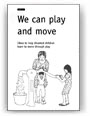
play and moveSince our last announcement, we have also added a guest publication, the illustrated We can play and move: ideas to help disabled children learn to move through play.
Related Articles

  • Networklearning’s new guides give the essential facts

    Conflict. We come across it all the time – because it can occur whenever people disagree over their values, motivations, perceptions, ideas, needs, desires… The good news is that engaging with conflict in a healthy way can help resolve intractable issues and clear the air. Our handy 3-page Key Information Sheet, Conflict Matters , clearly explains. Another Key Information Sheet – on ‘Networking’ – has recently been translated into Arabic by our colleague Asmaa Gillespie. > Networklearning’s Key Information Sheets Homosexuality is an issue with the potential to confuse or even provoke irrational response. Basic, clear information can help here, too. So we have produced a no-frills 12-page publication to give the straight Facts about Homosexuality . We also welcome to our library the guest publication Better Ways to Stay Healthy in Asian Tropics , by our experienced colleague Bryan Walker.

  • Big problems demand small solutions

    Big business, with its pursuit of profit at all costs, creates some huge problems in society. Such as poisoned environments, factories run with slave labour… and the process of globalisation is spreading them everywhere. So what can the little person do? Just this: make a conscious choice not to participate – and actively search out better alternatives. Because while the world is awash with stuff we don’t need, we definitely do need more ethical entrepreneurs. And, at the same time, conscious consumers. A nice example is Sanchi Bags, recently started up in India with the vision to promote the use of eco-friendly products and empower women. The idea is that the fashionable bags – including ones for laptops and tablets – will attract youth into the “go green” movement and become trendsetters across generations. The bags are made from locally-sourced biodegradable material and, most importantly, manufactured in their own households by suburban and rural woman homemakers. You can connect with Sanchi via their facebook page www.facebook.com/sanchibags

  • Finding stuff on our site

    We appreciate it’s not always easy to find everything on our site so here’s a quick guidance: All our manuals (Word and PDF documents) can be found in the Library . Tip: to find a particular title, instead of scrolling through the whole list you can use the ‘Library Themes’ menu which appears at the left of the library page. All our other resources (articles and links to information) are categorized into NGO Fields and NGO Skills . To locate all the info on a specific keyword, it’s quickest to use the searchbox (located at the right on every page). Difficulty downloading from the Library? Depending on your own browser settings, when you click on ‘Download’ the document may open in your browser window instead of being downloaded to your hard disc. If this happens, you can save the PDF to a location of your choice via the browser menu (File > Save As) Does this solve your problems? If not, please contact us.

  • Books go into the field

    We recently offered some printed materials to our registered users (the OXFAM Gender Training manual, Stepping Stones training package on HIV/AIDS, and a set of French flannelgraphs for health education). The three NGOs who received them were: CISS in Kisumu, Kenya, an NGO that works with communities, increasing their participation in the democratic process, in community-managed development etc. People in Need , An NGO in Trincomalee, Sri Lanka funded by the Czech Republic, working to rebuild physical and social structures after the Tsunami. The Pemba Island Relief Organisation (PIRO) Tanzania which has a small resource centre for local NGOs and supports CBOs working to strengthen Sexual Reproductive Health Information & Services. Does your own NGO have materials that you really do not use? You could circulate a list to the members of NGO groups to which you belong, offering a loan or a swop. Unused Manuals and other materials are wasted resources.