In Arabic: NGO Self-assessment through a SWOT exercise
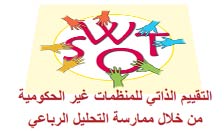 SWOT is a proven method for analysing your NGO’s Capacity and to successfully implement a strategic plan.

SWOT is a proven method for analysing your NGO’s Capacity and to successfully implement a strategic plan.

We are delighted to offer a new edition of our popular guest publication about employment in the humanitarian sector. ‘Better Ways to Succeed in Aid and Development Work’ is a thoroughly informative guide to ‘getting started, getting in and getting on’. » Download directly from the Library Also newly revised, including extra information and appendices: » Better Ways to Stay Healthy in Asian Tropics . Thanks to Bryan Walker for providing these.

We are pleased to announce the release of a new manual specifically designed to plug a gap – by helping NGOs in the Middle East and North Africa who want to do more in the field of Human Rights. A lot of consideration and cross-cultural consultation has gone into the making of An Introduction to Human Rights in the Middle East & North Africa – a Guide for NGOs . Note, for slow internet connections, we recommend to download the smaller (1Mb) PDF rather than the Word doc. We’re now have an Arabic language version of this title to join our growing list of manuals and resources in Arabic . Games are a great way to get behaviour change. So we thought we’d breathe new life into an old favourite – Having Healthy Babies: an Educational “Snakes and Ladders” Game gets across the key messages via a colourful game board and question cards. Full supporting information and instructions included! Finally, in case you didn’t notice it slip into our library in the summer: we have a handy 17-page guide to Managing the Project Cycle .

We have created a single-page PDF to explain what we offer in a nutshell – feel free to pass on to colleagues or to print out and stick on a suitable noticeboard. > Download from our networklearning profile page (the link to the PDF is in the panel on the right).
Hesperian have informed us that a number of their manuals are now translated into Arabic. They cover both health and disability and include “Where Women Have No Doctor”. “Where there is no Doctor” “Where Women have no Doctor” ”Where there is no Dentist” ”Special Education” ”Disabled Village Children” For the above titles, contact Ghanem Bibi Arab Resource Collective (ARC) Beirut email: arcleb@mawared.org web: www.mawared.org “Helping Health Workers Learn” Contact Abd Ilah Hussein Institute for Arab Research P.O. Box 13-5057 (Chouran) Beirut, LEBANON Tel: 810055/6 “Helping Children Who Are Blind” Contact Ashraf Mahrous, Compubraille, P.O. Box 156 , 76th Street #12 , El Mukattam, Cairo, 11571 EGYPT Tel: 00202 25084152 email: compubraille@link.net
We have received a paper on silicosis from Aung Ko Ko, now with UNDP in Myanmar (Burma) and with a background in Public Health. He reminds us of all the occupational diseases which continue to cripple and kill in the Developing Countries. The West had silicosis and other killers of the Industrial Revolution, illnesses like mill fever and phossy jaw that went away with Trades Unions and forward-thinking legislation, with laws and inspections and owners (occasionally) imprisoned. But for the workers of Myanmar still it goes on. > Poverty & occupational health: Silicosis
Recently we talked in a blog about women-friendly spaces. In UNICEF’s report State of the World’s Children (2012) there are examples of NGOs providing teenage-friendly spaces . The report focuses on the fact that more and more children and teenagers are growing up in cities. Think of the difficulties of being poor, female, (males another time) living in an urban slum.