New Human Rights guide, localized for MENA
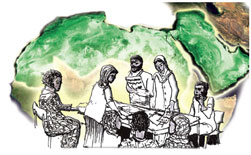
article-humanrightsWe are pleased to announce the release of a new manual specifically designed to plug a gap – by helping NGOs in the Middle East and North Africa who want to do more in the field of Human Rights. A lot of consideration and cross-cultural consultation has gone into the making of An Introduction to Human Rights in the Middle East & North Africa – a Guide for NGOs.

Note, for slow internet connections, we recommend to download the smaller (1Mb) PDF rather than the Word doc. We’re now have an Arabic language version of this title to join our growing list of manuals and resources in Arabic.
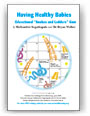
healthy-babiesGames are a great way to get behaviour change. So we thought we’d breathe new life into an old favourite – Having Healthy Babies: an Educational “Snakes and Ladders” Game gets across the key messages via a colourful game board and question cards. Full supporting information and instructions included!

Finally, in case you didn’t notice it slip into our library in the summer: we have a handy 17-page guide to Managing the Project Cycle.

Related Articles

  • Jargon – necessary or nonsense?

    New titles for familiar issues is a problem for me. I have to learn the new titles and abbreviations – and often it feels as if someone thought them up to be on the inside and make me feel an outsider. But it is important to keep up and take part in the debate. We must not be overawed by jargon. And we can let each other know when a new term becomes important. I saw “mHealth” in several places and googled it. It means health care and public health programmes supported by mobile electronic gear such as mobile phones. ~ MM

  • Female condoms

    This piece is about female condoms. I bring them up for discussion because they are currently out of the limelight. When they first appeared, they seemed full of promise – a method of protection against pregnancy and HIV which could be used and controlled by women. In practice they pose problems – including the fact that they are a bit of a joke. So this is a reminder of the key facts and issues.

  • A New Approach developed by the blind

    A Canadian, Daniel Kish, who was born blind, felt that his mobility – using a long white stick – was too limiting. He set about finding out how to improve on it and has now developed a mission to facilitate the self-directed achievement of blind people everywhere. A key component is echo-location, which involves blind people making noises to bounce off objects nearer and further away; they can be trained to become much more aware of the sounds around them, to become more confident and to move more freely. Graduates use bicycles to travel around. A full explanation of World Access for the Blind’s ‘Perception Based’ approach can be read at www. worldaccessfortheblind .org/node/120

  • Financial management guide for the non-financial

    Managing the money is a subject that anyone starting an NGO needs to grasp well. You need to be comfortable with accounting terminology and have confidence in the bookkeeping system you use. Networklearning’s new Beginner’s Guide to NGO Financial Capacity (31-page PDF) aims to make the learning curve easier – for all of us who don’t have a financial background or higher education. It bundles together best practices and explains the necessary jargon in simple language, with examples, from the perspective of an NGO. By reading it and discussing its content with other colleagues, non-technical staff will be able to learn and master essential functions in financial management, including planning, control and supervision – laying the groundwork for success and sustainability. » Download directly from the Library

  • A city livable for children

    We have been contacted by a colleague who works in Nagpur, India. She told us about the work her NGO is doing with urban spaces. The needs (rights) for children to play can be partly met by making parks safe, pleasant and used. The NGO has worked with the community to upgrade eight parks. Some of the parks have also had further work to make them accessible for disabled kids. This sounds like a great development field which is new to us. More info: http://www.esafindia.org/livable-cities-india.html and https://livablecitiesindia.wordpress.com